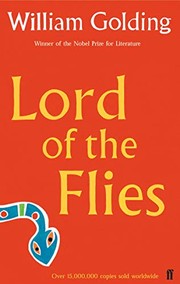
young adult fiction · 1954
Lord of the Flies
1954 novel by William Golding
- 1954
- young adult fiction
- allegory
- robinsonade
- science fiction
- dystopian fiction
- ◆ Nobel-winning author
Summary
Lord of the Flies is the 1954 debut novel of British author William Golding. The plot concerns a group of prepubescent British boys who are stranded on an uninhabited island and their disastrous attempts to govern themselves that lead to a descent into savagery. The novel's themes include morality, leadership, and the tension between civility and chaos.
Source: Wikipedia (CC BY-SA).
Historical Background
Golding wrote Lord of the Flies (1954) in the aftermath of World War II, in which he served as a naval officer and witnessed combat, including the D-Day landings. That experience, combined with the horrors of the Holocaust and Hiroshima, shattered his earlier faith in human progress and innate goodness. The novel directly answers the Victorian adventure-story tradition of boys' fiction, especially R. M. Ballantyne's The Coral Island (1858), in which shipwrecked British boys behave with cheerful decency and ingenuity. Golding, a former schoolmaster who had observed children's capacity for cruelty firsthand, inverted that optimistic template to ask what would really happen if civilized restraints were removed. The book was written during the early Cold War, amid fears of nuclear annihilation, and its unnamed atomic war frame and downed aircraft reflect that anxiety. It was rejected by several publishers before Faber and Faber accepted it, with editor Charles Monteith championing the manuscript. Initially a modest seller, it became a cultural touchstone in the 1960s, especially on university campuses, and is now regarded as a modern classic of allegorical fiction and a staple of school curricula worldwide.
The Story
A group of British schoolboys, evacuated during a nuclear war, survive a plane crash on a remote, uninhabited tropical island with no adults. Ralph, athletic and level-headed, is elected leader and, with the philosophical Piggy as advisor, establishes early order: a conch shell summons assemblies, and a signal fire is meant to attract rescue. Jack Merridew, head of the choirboys, is put in charge of hunting but grows increasingly obsessed with killing pigs and hunger for power. As fear of a mysterious "beast" spreads among the younger boys, rational order unravels. Jack breaks away to form his own tribe devoted to hunting, feasting, and ritual, drawing most of the boys from Ralph's shrinking group through the promise of meat, freedom, and violent excitement. The mystic outsider Simon discovers that the "beast" is only a dead parachutist, but is killed by the frenzied tribe, who mistake him for the monster during a ritual dance. Piggy is murdered when Jack's tribe raids Ralph's camp, and Ralph becomes the tribe's final quarry, hunted across the burning island. Just as he is cornered, a British naval officer, drawn by the smoke of the fire the boys set to smoke him out, arrives on the beach, and the survivors collapse in grief for their lost innocence.
Themes
- Civilization versus savagery
- The fragility of social order
- Innate human capacity for evil
- Loss of innocence
- Power, leadership, and mob psychology
- Fear and the construction of the 'beast'
- Rationality versus instinct
- Individual conscience versus group conformity
Literary Devices
- Allegory — the island and its collapse allegorize human society and the failure of civilization
- Symbolism — objects (conch, fire, glasses, masks) embody abstract ideas throughout
- Foreshadowing — early hints of violence (the fire, the chant) anticipate later killings
- Irony — the boys are rescued by a naval officer engaged in the very war and savagery they replicated in miniature
- Biblical and mythic allusion — the title, the 'Lord of the Flies' (a translation of Beelzebub), and Simon's Christ-like death evoke religious parable
- Characterization as embodiment — Ralph, Jack, Piggy, and Simon each personify a distinct human faculty (order, savagery, reason, spirituality)
- Vivid natural imagery — the island's beauty juxtaposed with encroaching darkness and violence
Symbolism
- The conch shell — democratic order, civilized authority, and the rule of law
- The signal fire — hope of rescue and connection to civilization; its neglect signals civilization's decline
- Piggy's glasses — rationality, science, and clear-sightedness; their theft marks reason's defeat
- The Lord of the Flies (the pig's head on a stake) — the innate evil and savagery within all humans
- The beast — irrational fear itself, projected onto an external monster rather than recognized within
- Painted faces and masks — the shedding of civilized identity and moral restraint
Critical Interpretation
Critics have long read Lord of the Flies through a Hobbesian lens, as a rebuttal to Rousseauvian faith in natural human goodness and to the boys'-adventure optimism of Ballantyne's The Coral Island. Golding's own stated purpose was to trace society's ills to human nature rather than to political systems, and many readings foreground the novel's pessimistic, quasi-religious view of innate evil, informed by his wartime experience. Psychoanalytic critics have mapped Ralph, Piggy, and Jack onto ego, superego, and id. Feminist and gender critics have noted the novel's all-male cast and questioned what an all-female or mixed group might reveal, while postcolonial readings interrogate its assumptions about "savagery," civilization, and its colonial-adventure inheritance. Some critics fault the novel's schematic, almost fable-like characterization and its heavy allegorical machinery as reducing psychological complexity, while others defend this deliberate simplicity as essential to its power as parable. It remains a frequently challenged book in some school systems for its violence, but is equally frequently set as a core curricular text.
Quotations
Kill the pig. Cut her throat. Spill her blood.
The hunters' chant after their first successful kill in Chapter 4, marking their descent into ritualized savagery.
Fancy thinking the Beast was something you could hunt and kill!
Spoken by the Lord of the Flies (the pig's head on a stake) to Simon in Chapter 8, revealing that the beast is not an external creature but lies within the boys themselves, shortly before Simon's death.
The rules! You're breaking the rules!
Ralph protests as Jack dismisses the assembly's authority, defending the rules as the boys' last link to civilized order.
Influence
Lord of the Flies became a foundational modern text for the dystopian and psychological survival-fiction traditions, shaping later works that explore group breakdown and the thinness of civilized order, from Stephen King's writing to countless "society collapses on an island/in isolation" narratives and young-adult dystopias such as The Hunger Games. Its title and central symbol entered common cultural vocabulary as shorthand for descent into mob savagery. The novel's stark allegorical method and pessimistic anthropology influenced subsequent literary and popular treatments of childhood, group psychology, and civilizational fragility, and it remains a benchmark against which survival and isolation narratives are measured.
Adaptations
- Lord of the Flies (1963 film, directed by Peter Brook)
- Lord of the Flies (1990 film, directed by Harry Hook)
Related Works
- The Coral Island by R. M. Ballantyne
- Robinson Crusoe by Daniel Defoe
- Heart of Darkness by Joseph Conrad
- 1984 by George Orwell
- The Inheritors by William Golding
Curator's Notes
- 1The title is a literal translation of 'Beelzebub,' a name for a demonic figure associated with the devil.
- 2The novel was Golding's debut and was rejected by numerous publishers before Faber and Faber accepted it.
- 3Golding served in the Royal Navy during World War II, including participation in the D-Day invasion, an experience that shaped the novel's dark view of human nature.
- 4The book directly inverts R. M. Ballantyne's Victorian adventure novel The Coral Island, whose characters share similar names (Ralph and Jack) but a far more optimistic fate.
For the Exam
UGC NET English commonly tests Lord of the Flies as a mid-twentieth-century allegorical novel: expect questions on its publication year (1954), its status as Golding's debut, its central symbols (conch, fire, glasses, the Lord of the Flies/pig's head), its allegorical characters (Ralph, Jack, Piggy, Simon), its intertextual relationship to Ballantyne's The Coral Island, and its thematic concern with civilization versus savagery and innate human evil, often framed against Golding's Nobel Prize in Literature (1983) and post-war British fiction.