psychological fiction · 1900
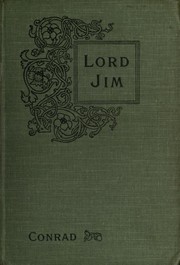
Lord Jim
1900 novel by Joseph Conrad
- 1900
- psychological fiction
Summary
Lord Jim is a novel by Joseph Conrad originally published as a serial in Blackwood's Magazine from October 1899 to November 1900. An early and primary event in the story is the abandonment of a passenger ship in distress by its crew, including a young British seaman named Jim. He is publicly censured for this action and the novel follows his later attempts at coming to terms with himself and his past and seeking redemption and acceptance.
Source: Wikipedia (CC BY-SA).
Historical Background
Lord Jim was serialized in Blackwood's Magazine from October 1899 to November 1900, and published in book form in 1900. Conrad drew on his own decades as a merchant marine officer and, more specifically, on the real 1880 case of the SS Jeddah, a steamer carrying Muslim pilgrims that was abandoned by its European officers when it seemed to be sinking; the ship in fact survived, and the officers faced an official inquiry, much as Jim does in the novel. By this point Conrad had already introduced the narrator Charlie Marlow in the story "Youth" and would use him again in Heart of Darkness, developing a technique of layered, retrospective, multi-voiced narration that broke from straightforward Victorian storytelling. The novel reflects Conrad's recurring concerns across his sea fiction: codes of honor and seamanship, guilt and self-judgment, and the isolation of Europeans in colonial Southeast Asian settings. Lord Jim is widely regarded as a founding text of literary Impressionism in English fiction and an important early instance of modernist narrative technique, and its publication helped establish Conrad's reputation as a major novelist.
The Story
Jim, a young English officer with romantic dreams of heroism, serves as chief mate on the Patna, a decrepit steamer carrying Muslim pilgrims. When the ship appears about to sink after striking a submerged object, Jim panics and jumps overboard with the other officers, abandoning the passengers to what seems certain death. The Patna does not sink, however, and is towed to port, turning the desertion into a public scandal. At the official inquiry, Jim alone among the fled officers remains to face judgment, and his certificate is revoked. The narrator, Charlie Marlow, becomes fascinated by Jim's case and reconstructs his story from multiple witnesses and later encounters, unable to resolve whether Jim is simply a coward or a man undone by a single moment of weakness. Marlow helps Jim find a series of posts, and Jim eventually settles in the remote Malay trading outpost of Patusan, where, cut off from his past, he wins the trust and admiration of the local people and becomes their respected leader, known as "Tuan Jim" (Lord Jim). He finds love with a woman called Jewel and seems finally to have redeemed himself. But when the marauder Gentleman Brown arrives and threatens the settlement, Jim's misplaced trust in Brown's word leads to the deaths of his closest ally's son and others. Rather than flee again, Jim deliberately submits to execution at the hands of the chief he has failed, choosing death over another act of betrayal.
Themes
- Guilt, shame, and the search for redemption
- Heroism versus cowardice and the gap between ideal and act
- Honor codes and their fragility under pressure
- Identity, self-image, and the unreliability of self-knowledge
- Isolation of the European in a colonial setting
- The impossibility of fully knowing another person
- Fate, chance, and moral responsibility
- Judgment, both legal and moral, and its limits
Literary Devices
- Frame narrative and multiple narrators — Marlow retells a story assembled from testimony, letters, and hearsay, layering perspectives
- Non-linear, fragmented chronology — events are revealed out of order, mirroring the difficulty of moral judgment
- Impressionist narration — meaning is built through partial, subjective impressions rather than omniscient summary
- Symbolic setting — the Patna and Patusan function as morally charged spaces
- Unreliable and interpretive narrator — Marlow openly admits uncertainty about Jim's true character
- Doubling and foils — characters such as Gentleman Brown and Stein mirror or comment on Jim's dilemma
- Irony — Jim's attempt at heroic redemption in Patusan is undone by the same misplaced trust that echoes his earlier failure
Symbolism
- The jump from the Patna — the single irreversible act that defines and haunts Jim's identity
- Patusan — an isolated realm offering the illusion of a fresh start and self-made heroism
- The title "Lord Jim" / "Tuan Jim" — the gap between conferred honor and inner self-doubt
- Water and the sea — the unpredictable element that tests character and cannot be mastered by will alone
- Gentleman Brown — the intrusion of Jim's past guilt into his constructed new life
Critical Interpretation
Lord Jim has long been central to debates about literary Impressionism and early modernism, with critics such as Ian Watt examining Conrad's technique of "delayed decoding," in which sensory impressions are presented before their rational explanation. F. R. Leavis included Conrad in his "Great Tradition" of the English novel, praising the moral seriousness of the work, though he also criticized Conrad's prose in places as overwrought. Marlow's unreliable, interpretive narration has drawn extensive attention from narratological critics interested in how the novel dramatizes the limits of knowing another person's inner life. Postcolonial critics, following the broader critique associated with Chinua Achebe's response to Heart of Darkness, have questioned the novel's representation of Patusan and its Malay inhabitants as a backdrop for a European's redemption. Psychoanalytic and existentialist readings have focused on Jim's self-division and his final choice of death as an assertion of will and identity rather than mere despair.
Quotations
In the destructive element immerse.
Stein's advice to Jim on how to survive one's ideal conception of oneself.
He was one of us.
Marlow's recurring, ambivalent refrain about Jim's kinship with other seamen.
Influence
Lord Jim's technique of fragmented, multiply-mediated narration through Marlow influenced the development of modernist fiction's interest in subjective and unreliable point of view, anticipating later experiments by writers such as Ford Madox Ford (Conrad's own collaborator) and, more broadly, the psychological and narratological innovations associated with modernism. Conrad's exploration of moral ambiguity, guilt, and the unreliability of heroic self-narrative shaped subsequent literary treatments of colonial settings and of the "outsider" figure struggling to reconcile ideal and act, influencing writers grappling with existentialist themes of authenticity and self-judgment in the twentieth century.
Adaptations
- Lord Jim (1965 film), directed by Richard Brooks, starring Peter O'Toole
Related Works
- Heart of Darkness by Joseph Conrad
- Nostromo by Joseph Conrad
- Youth by Joseph Conrad
- The Secret Agent by Joseph Conrad
- The Nigger of the 'Narcissus' by Joseph Conrad
Curator's Notes
- 1Lord Jim was first serialized in Blackwood's Magazine from October 1899 to November 1900 before its book publication.
- 2The novel was inspired by the real 1880 case of the SS Jeddah, whose officers abandoned a ship full of pilgrims that did not sink.
- 3Charlie Marlow, the narrator, is the same character Conrad used as narrator in "Youth" and Heart of Darkness.
- 4Conrad drew on his own long career as a merchant marine officer, including time sailing in Southeast Asian waters, for the novel's settings.
For the Exam
UGC NET English typically tests Lord Jim on: its status as a landmark of literary Impressionism and early modernism; Conrad's narrative technique via Charlie Marlow and the frame/multiple-narrator structure; the central moral crisis of the Patna jump and its link to the real Jeddah incident; themes of guilt, honor, and redemption; the significance of Patusan as a colonial setting; and postcolonial critiques of Conrad's representation of non-European characters, alongside comparisons to Heart of Darkness.