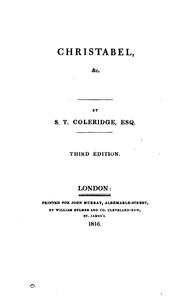
poetry · 1816
Kubla Khan
poem by Samuel Taylor Coleridge
- 1816
- poetry
Summary
Kubla Khan: or A Vision in a Dream is a poem written by Samuel Taylor Coleridge, completed in 1797 and published in 1816. It is sometimes given the subtitles "A Vision in a Dream" and "A Fragment." According to Coleridge's preface to Kubla Khan, the poem was composed one night after he experienced an opium-influenced dream after reading a work describing Xanadu, the summer capital of the Mongol-led Yuan dynasty of China founded by Kublai Khan. Upon waking, he set about writing lines of poetry that came to him from the dream until he was interrupted by "a person on business from Porlock". The poem could, according to Coleridge, not be completed according to its original 200–300 line plan, as the interruption caused him to forget the lines. He left it unpublished and kept it for private readings for his friends until 1816 when, at the prompting of Lord Byron, it was published.
Source: Wikipedia (CC BY-SA).
Historical Background
Samuel Taylor Coleridge composed "Kubla Khan" in 1797, during the extraordinarily productive period that also produced "The Rime of the Ancient Mariner" and "Christabel", but kept it unpublished for nearly twenty years, circulating it only in private readings. According to the preface Coleridge attached when it finally appeared, he had fallen asleep in a lonely farmhouse after taking an anodyne, having been reading a passage in Samuel Purchas's Purchas his Pilgrimage describing the palace and grounds that Kublai Khan ordered built at Xanadu, the summer capital of the Mongol-led Yuan dynasty. In the dream, he claimed, two or three hundred lines composed themselves without conscious effort; on waking he began setting them down, only to be interrupted by a person on business from Porlock, and when he returned the remainder had dissolved. The poem was published in 1816 at the urging of Lord Byron, in a slim volume alongside "Christabel" and "The Pains of Sleep", carrying the subtitle "A Vision in a Dream. A Fragment". Whether the preface is candid autobiography or a carefully constructed frame that licenses the poem's abrupt shifts has been argued ever since.
The Story
The fifty-four-line poem is not a narrative but a sequence of visions in shifting metre and rhyme. It opens with the decree: in Xanadu Kubla Khan orders a stately pleasure-dome where Alph, the sacred river, runs through caverns measureless to man down to a sunless sea. Ten miles of fertile ground are girdled round with walls and towers, holding gardens, incense-bearing trees, and forests as ancient as the hills. Against this enclosed order the poem sets a wild counter-image: a deep romantic chasm slanting down the hill, a savage place, holy and enchanted, from which a mighty fountain is forced in fast thick pants, flinging up huge fragments of rock. From it the sacred river runs five miles through wood and dale before sinking in tumult to a lifeless ocean, and amid that tumult Kubla hears ancestral voices prophesying war. The shadow of the dome floats midway on the waves, where the mingled measure of fountain and caves can be heard — a miracle of rare device, a sunny pleasure-dome with caves of ice. The final movement breaks the frame entirely and turns to the poet himself: he recalls a vision of a damsel with a dulcimer, an Abyssinian maid singing of Mount Abora, and declares that could he revive her symphony and song within him, he would build that dome in air, and all who heard would see it and cry beware of his flashing eyes and floating hair — and would weave a circle round him thrice, because he has fed on honey-dew and drunk the milk of Paradise.
Themes
- The nature and power of the poetic imagination
- Artistic creation as both divine gift and dangerous possession
- The sublime — beauty inseparable from terror
- Order and enclosure set against wild, ungovernable energy
- The fragment as a form: vision glimpsed and lost
- Inspiration recovered through memory and song
- Empire, decree, and the prophecy of war
- The exotic East as a landscape of the mind
Literary Devices
- Oxymoron — "a sunny pleasure-dome with caves of ice", holding opposites in a single image
- Alliteration and assonance — dense sound-patterning that carries the poem's incantatory force
- Irregular rhyme and shifting metre — the verse reshapes itself at each new vision
- Allusion — to Purchas his Pilgrimage, to Xanadu and Kublai Khan, and to Mount Abora
- Symbol — the dome, the river, and the chasm as figures for art and its sources
- Synaesthesia — sound, sight, and taste fused in the closing lines
- Shift in speaker — the abrupt turn from the Khan's Xanadu to the poet's own first-person vision
- Repetition and incantation — the ritual rhythm of "weave a circle round him thrice"
Symbolism
- The pleasure-dome — the work of art, willed into being and suspended between opposites
- Alph, the sacred river — the creative current, flowing from unknown source to unknown end
- The caverns measureless to man — the unconscious depths beyond rational survey
- The deep romantic chasm and fountain — the violent, involuntary origin of inspiration
- The caves of ice — the paradox of an art at once warm and permanent, alive and fixed
- The Abyssinian maid and her song — lost inspiration that the poet strains to recover
- Honey-dew and the milk of Paradise — divine nourishment marking the poet as set apart
Critical Interpretation
"Kubla Khan" has generated a critical literature out of all proportion to its length, much of it concerned with whether it is a fragment at all. John Livingston Lowes's The Road to Xanadu (1927) is the classic source study, tracing the poem's images through the travel books and natural histories Coleridge had been reading and arguing that the dream reassembled material already deep in his memory. Elisabeth Schneider's Coleridge, Opium and Kubla Khan (1953) subjected the preface itself to scrutiny, questioning the tidy account of composition and treating the fragment-claim as a literary strategy rather than a plain record. Later critics have read the poem as a complete and self-aware work about incompleteness — a poem whose subject is precisely the impossibility of sustaining vision, so that its breaking-off enacts its theme. The closing lines have been read as the fullest Romantic statement of the poet as inspired and dangerous figure, set apart by his gift and ritually contained by those who witness it. Postcolonial readings have examined the poem's orientalism, the way Xanadu functions less as a place than as a projection, and the significance of the ancestral voices prophesying war within an imperial pleasure-ground.
Quotations
In Xanadu did Kubla Khan / A stately pleasure-dome decree
The famous opening, establishing the poem's incantatory rhythm
Through caverns measureless to man / Down to a sunless sea.
The sacred river's descent beyond the reach of human measurement
A savage place! as holy and enchanted
The turn from cultivated garden to sublime wilderness
It was a miracle of rare device, / A sunny pleasure-dome with caves of ice!
The poem's central oxymoron, frequently set in examinations
For he on honey-dew hath fed, / And drunk the milk of Paradise.
The final image of the poet as one marked out by visionary nourishment
Influence
"Kubla Khan" became the defining English poem of the creative imagination and a permanent reference point for Romantic theories of inspiration. Its vocabulary passed into general usage: Xanadu became a byword for a remote and opulent pleasure-ground — most famously as the name of the estate in Orson Welles's Citizen Kane — and the person from Porlock became the standard English figure for the interruption that destroys a work in progress, an idiom Stevie Smith turned into her poem "Thoughts about the Person from Porlock". The poem's licensing of dream-logic, abrupt transition, and sound over statement fed into Symbolist and later modernist practice, and its closing portrait of the poet as possessed and set apart shaped the Romantic conception of poetic vocation that persisted throughout the nineteenth century. Its status as a deliberate fragment also helped establish incompleteness as a legitimate literary form rather than a failure.
Related Works
- The Rime of the Ancient Mariner by Samuel Taylor Coleridge
- Christabel by Samuel Taylor Coleridge
- Frost at Midnight by Samuel Taylor Coleridge
- Dejection: An Ode by Samuel Taylor Coleridge
- Biographia Literaria by Samuel Taylor Coleridge
- Lyrical Ballads by William Wordsworth and Samuel Taylor Coleridge
Curator's Notes
- 1The poem was composed in 1797 but withheld from print until 1816, when Coleridge published it at Lord Byron's urging.
- 2It appeared with the subtitle "A Vision in a Dream. A Fragment", in a volume that also contained "Christabel" and "The Pains of Sleep".
- 3Coleridge's stated source was Samuel Purchas's Purchas his Pilgrimage, describing the palace Kublai Khan ordered built at Xanadu.
- 4The "person on business from Porlock" who interrupted the writing has become the standard English idiom for an inspiration-destroying interruption.
- 5John Livingston Lowes devoted the book-length study The Road to Xanadu (1927) to tracing the poem's imagery through Coleridge's reading.
- 6Elisabeth Schneider's Coleridge, Opium and Kubla Khan (1953) questioned whether the preface's account of composition should be taken at face value.
- 7Xanadu supplied the name of Charles Foster Kane's estate in Citizen Kane.
For the Exam
UGC NET questions on "Kubla Khan" cluster around its composition and publication history: written 1797, published 1816 at Byron's prompting, subtitled "A Vision in a Dream. A Fragment", issued with "Christabel" and "The Pains of Sleep". Examiners regularly test the source in Purchas his Pilgrimage, the person from Porlock, Alph the sacred river, the "caverns measureless to man", the oxymoron "a sunny pleasure-dome with caves of ice", the damsel with a dulcimer and the Abyssinian maid singing of Mount Abora, and the closing "milk of Paradise". Know John Livingston Lowes's The Road to Xanadu and Elisabeth Schneider's study as the standard criticism, and be ready to discuss the poem's fragment status and its place in Romantic theories of imagination alongside Coleridge's Biographia Literaria.