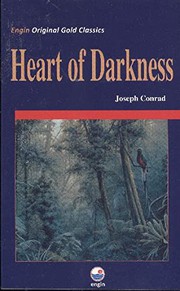
fiction literature · 1899
Heart of Darkness
1899 novella by Joseph Conrad
- 1899
- fiction literature
- serialized fiction
- historical fiction
Summary
Heart of Darkness is an 1899 novella by Polish-British novelist Joseph Conrad, in which sailor Charles Marlow tells the story of his assignment as steamer captain for a Belgian company in the African interior. The novel is widely regarded as a critique of European colonialism in Africa, whilst also examining the themes of power dynamics and morality.
Source: Wikipedia (CC BY-SA).
Historical Background
Heart of Darkness first appeared serialized in Blackwood's Edinburgh Magazine in 1899, later collected in Youth: A Narrative and Two Other Stories (1902). Conrad drew directly on his own 1890 experience piloting a steamer up the Congo River for a Belgian trading company, during the height of King Leopold II's brutal personal exploitation of the Congo Free State. That firsthand exposure to the machinery of imperial extraction—forced labor, mutilation, staggering mortality among Congolese workers—shaped the novella's unflinching portrait of colonial violence beneath a veneer of "civilizing" rhetoric. Conrad, born Józef Teodor Konrad Korzeniowski into a Polish family in the Russian Empire (in present-day Ukraine), wrote in English as his third language after a career at sea, and his outsider's vantage informed his skepticism toward European imperial self-justification. The novella emerged amid the "Scramble for Africa" and contemporary debates over empire, and it uses a frame narrative—Marlow recounting his tale to listeners aboard a boat on the Thames—to fold London itself, "also one of the dark places of the earth," into its critique, refusing easy separation between metropole and colony.
The Story
Aboard the Nellie, anchored on the Thames, the sailor Marlow recounts to fellow passengers his journey into the Congo as a steamboat captain for a Belgian ivory-trading company. Traveling upriver, Marlow witnesses the horrors of colonial exploitation: chained and starving African laborers, wasteful cruelty, and the hollow greed of the Company's agents, who mask plunder in language of progress and enlightenment. He becomes increasingly fixated on Kurtz, a brilliant, charismatic agent stationed deep in the interior who has amassed enormous quantities of ivory and, Marlow hears, has achieved almost godlike dominance over the local population through unrestrained violence and terror. As Marlow's steamboat pushes toward the Inner Station, the journey becomes as much psychological as geographical, an approach toward something Marlow can barely articulate. When he finally reaches Kurtz, he finds a man ravaged by illness and moral collapse, having abandoned all restraint. Kurtz dies aboard the steamboat on the return journey, uttering his final words, "The horror! The horror!" Back in Europe, a shaken Marlow visits Kurtz's grieving fiancée, the "Intended," and, unable to voice the truth, tells her that Kurtz's last word was her name—a lie he offers to preserve her illusions against the darkness he has witnessed.
Themes
- Imperialism and its hypocrisies
- The darkness within civilization and the human psyche
- Moral ambiguity and the limits of truth-telling
- Journey as psychological descent
- Power, domination, and dehumanization
- The unreliability of language and narrative
- Isolation and the fragility of restraint
- Light versus darkness as unstable moral symbols
Literary Devices
- Frame narrative — Marlow's tale is relayed secondhand by an unnamed listener aboard the Nellie, distancing and complicating the reader's access to truth
- Symbolism — recurring light/dark and river imagery destabilizes conventional moral associations between civilization and savagery
- Impressionist narration — Marlow's account favors atmosphere, fragmented perception, and delayed meaning over linear clarity
- Unreliable/limited narration — Marlow's own biases and gaps in understanding color the entire account of Kurtz
- Irony — the rhetoric of imperial "civilizing mission" is repeatedly undercut by scenes of brutality and waste
- Foreshadowing — Kurtz's reputation and the ominous river journey build dread before his appearance
- Doubling — Marlow and Kurtz function as psychological mirrors, testing the limits of restraint
Symbolism
- The river Congo — a path into both geographic Africa and the depths of the human psyche
- Ivory — European greed and the commodification of human suffering
- Darkness — moral corruption, the unknown, and the limits of human understanding, applied to both Africa and Europe
- Fog — obscured moral vision and uncertainty
- The Intended's white dress and home — Europe's comforting illusions shielded from colonial truth
- Kurtz's painting of the blindfolded woman with a torch — the West's blind, misguided "enlightenment" of Africa
Critical Interpretation
Heart of Darkness has generated some of the most contested criticism in the English canon. Traditional readings, following F.R. Leavis and early modernist critics, praised its psychological depth and symbolic density as a landmark of modernist prose. The most influential challenge came from Chinua Achebe's 1975 lecture "An Image of Africa," which argued the novella dehumanizes Africans, reducing them to a wordless backdrop for a European psychological drama, and charged Conrad with racism—a claim that reshaped decades of subsequent scholarship. Edward Said, in Culture and Imperialism, offered a more ambivalent postcolonial reading, crediting Conrad's critique of imperialism's brutality while noting his inability to imagine African agency or alternatives to empire. Feminist critics have examined the novella's treatment of women, particularly the Intended, as figures kept willfully ignorant of colonial truth. Psychoanalytic critics read Marlow's journey as a descent into the unconscious. The debate between Achebe's and Said's positions—racist text versus anti-imperialist critique with historical blind spots—remains central to how the work is taught and contested today.
Quotations
The horror! The horror!
Kurtz's dying words, aboard the steamboat on the return journey
We live, as we dream—alone.
Marlow reflecting on the impossibility of fully conveying one's experience to others
Mistah Kurtz—he dead.
Spoken by a servant reporting Kurtz's death
The conquest of the earth, which mostly means the taking it away from those who have a different complexion or slightly flatter noses than ourselves, is not a pretty thing when you look into it too much.
Marlow's early reflection on imperialism, aboard the Nellie
And this also has been one of the dark places of the earth.
Marlow's opening reflection, describing ancient Britain to undercut the frame's implicit contrast between civilized Europe and "dark" Africa
Influence
Heart of Darkness became a touchstone of literary modernism and one of the most widely taught, adapted, and contested works in English literature. Its influence extends across the twentieth century's engagement with empire, most famously inspiring Francis Ford Coppola's Apocalypse Now (1979), which transposes Marlow's journey to the Vietnam War. Chinua Achebe's landmark critique of the novella helped catalyze postcolonial literary studies and reshaped debates on canon formation and representation of Africa in Western literature. The book's psychological interiority and ambiguous narration influenced subsequent modernist fiction, while its central image of a journey upriver toward moral reckoning has become a recurring literary and cinematic structure invoked far beyond its original context.
Adaptations
- Apocalypse Now (1979 film, directed by Francis Ford Coppola, freely adapted, relocated to the Vietnam War)
- Heart of Darkness (1993 television film, directed by Nicolas Roeg, starring Tim Roth and John Malkovich)
Related Works
- Lord Jim by Joseph Conrad
- Nostromo by Joseph Conrad
- The Secret Agent by Joseph Conrad
- Things Fall Apart by Chinua Achebe
- King Leopold's Ghost by Adam Hochschild
- A Passage to India by E.M. Forster
Curator's Notes
- 1Conrad based his fictional journey closely on his own 1890 voyage as a steamboat captain on the Congo River, an experience he later described as having profoundly disturbed him.
- 2Conrad wrote in English, his third language after Polish and French, having spent years as a merchant marine officer before turning to fiction.
- 3The novella was first published in three installments in Blackwood's Edinburgh Magazine in 1899 before being collected in book form in 1902.
- 4Chinua Achebe's 1975 essay attacking the novella as racist remains one of the most influential and debated pieces of literary criticism about any English-language text.
- 5The phrase "The horror! The horror!" has become one of the most frequently quoted and referenced lines in English literature and popular culture.
For the Exam
UGC NET frequently tests Heart of Darkness on: its status as a modernist critique of European imperialism and the Scramble for Africa; the frame narrative technique and Marlow as narrator; the Achebe-Said critical debate over racism versus anti-colonial critique; symbolism of light/darkness and the river; the significance of Kurtz as a figure of unchecked colonial power and moral collapse; comparison with Conrad's other works (Lord Jim, Nostromo); and its relationship to Apocalypse Now as a canonical literary-to-film adaptation. Questions often probe the "dark places of the earth" framing device and the ambiguous ending with the Intended.