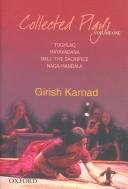
Summary
Hayavadana is a 1971 Indian Kannada language two-act play written by Girish Karnad. The plot is based on Br̥hatkathā and Thomas Mann's retelling of Transposed Heads. Its twin play is Nagamandala (1988). Hayavadana presents the story of two friends Devdutta and Kapila; and their love interest Padmini.
Source: Wikipedia (CC BY-SA).
Historical Background
Girish Karnad wrote Hayavadana in Kannada in 1971, during a period when he and contemporaries such as Vijay Tendulkar and Badal Sircar were reshaping modern Indian theatre by fusing Western dramatic technique with indigenous performance idioms. Karnad drew the central tale of transposed heads from the Sanskrit Kathasaritsagara (via the Brihatkatha tradition) and from Thomas Mann's novella "The Transposed Heads" (1940), itself a reworking of the same folk story. Karnad recast the narrative within an Indian theatrical idiom, framing it with the Bhagavata, a chorus-narrator figure drawn from yakshagana and other folk-performance traditions, alongside masks, curtains, dolls, and an opening invocation to the elephant-headed, "incomplete" god Ganesha. The parallel plot of Hayavadana, a horse-headed man seeking wholeness, comments on and complicates the human story of Devadatta, Kapila, and Padmini. The play was first staged in 1972 under B. V. Karanth's direction, and Karnad himself translated it into English. It quickly became one of the most widely studied and performed works of post-independence Indian drama, admired for its self-conscious use of traditional theatrical conventions to interrogate modern questions of identity, incompleteness, and the relationship between mind and body.
The Story
Devadatta, a scholar, and Kapila, a man of physical strength and craft, are devoted friends. Devadatta marries Padmini, a spirited woman drawn to qualities in both men. Travelling together, the three stop at a Kali temple, where Devadatta, tormented by inner conflict, beheads himself as a sacrifice. Kapila, discovering the body, kills himself out of guilt and grief. Padmini prays to Kali, who agrees to restore the men to life if she reattaches their heads to their own bodies; in her distraction she transposes the heads, joining Devadatta's head to Kapila's body and Kapila's head to Devadatta's body. When the men revive, both claim Padmini as wife, since each now inhabits a different body. A sage-hermit rules that the head determines identity, so Padmini lives with the man bearing Devadatta's head. Over time the body reasserts its own nature: the scholar's head loses its refinement while the labourer's body grows soft, and old tensions resurface. Kapila (in Devadatta's body) withdraws to the forest; Devadatta (with his own head restored to primacy) eventually seeks him out, and the two kill each other in a final duel. Padmini, left alone with their child, commits sati on their shared pyre, entrusting the boy to hunters, who raise him until he passes into the care of Devadatta's father, the Brahmin. In the play's framing subplot, Hayavadana, a man with a horse's head who longs to become fully human, is directed by the Bhagavata to the goddess Kali, who instead grants him a fully equine form and a human voice, and the play closes with a comic, affirming vision of transformation and acceptance as Padmini and Devadatta's son, mute until then, gains speech through laughter provoked by Hayavadana.
Themes
- The conflict between mind/intellect and body/desire
- Search for identity and wholeness
- Incompleteness as a condition of existence
- Love, desire, and the limits of possession
- Fate versus human choice
- Theatre and performance as self-conscious device
- Transformation and metamorphosis
Literary Devices
- Metatheatre — the play repeatedly draws attention to its own theatrical devices (masks, curtains, dolls, the Bhagavata) to comment on illusion and reality
- Bhagavata as chorus-narrator — a figure from yakshagana tradition who frames, narrates, and comments on the action
- Framing/parallel plot — the Hayavadana subplot mirrors and ironizes the central human story of incompleteness
- Masks — used to signal transposed identity and to foreground the artifice of character
- Symbolic use of dolls — silent figures that register the emotional truth the human characters cannot articulate
- Invocation and folk ritual form — the play opens with a prayer to Ganesha, situating the work within traditional performance conventions
- Irony — the sage's literal-minded ruling that the head determines identity is undercut by the body's eventual reassertion of its own nature
Symbolism
- Ganesha (the elephant-headed god) — invoked at the outset as a figure of paradoxical incompleteness/completeness, foreshadowing the play's central concern
- The transposed heads — the impossibility of separating mind from body, self from other
- The dolls — silent witnesses embodying suppressed emotional truths within the household
- Hayavadana's horse head — the human longing for wholeness and the comic acceptance of hybrid, imperfect identity
- The Kali temple — the site of sacrifice, transformation, and the goddess's ambiguous, non-rational power
Critical Interpretation
Hayavadana is central to discussions of post-independence Indian English and Kannada drama for its deliberate rejection of Western realist form in favour of folk theatre techniques (yakshagana, mask, curtain, the Bhagavata) to stage modern existential and psychological concerns. Critics commonly read the play through the lens of the mind-body problem, noting how the "literal-minded" resolution of the head-versus-body dispute exposes the inadequacy of rational, either/or categories for human identity. Feminist critics have examined Padmini as a figure whose desire cannot be contained by the men's competing claims, while postcolonial critics have discussed Karnad's use of Thomas Mann's Western retelling of an Indian source as itself an act of reclamation, folding a diasporic literary detour back into indigenous performance idiom. The play is frequently discussed alongside Karnad's other major dramas (Tughlaq, Nagamandala) as part of his sustained project of using myth and folk form to address contemporary anxieties about tradition, modernity, and selfhood.
Quotations
Why should love stick to the sap of a single body?
Spoken by the Female Chorus, which voices Padmini's unspoken longing for both Devadatta and Kapila.
Influence
Hayavadana is widely regarded as a landmark in the modern Indian theatre movement that sought indigenous alternatives to colonial-era proscenium realism. Its success helped legitimize the use of folk performance elements (masks, the Bhagavata, ritual invocation) within serious literary drama, influencing later Indian playwrights who blended myth and folk form with contemporary themes. Alongside works by Vijay Tendulkar and Mohan Rakesh, it remains a staple of Indian drama syllabi and a touchstone in comparative discussions of the Global Transposed Heads folk motif, linking Sanskrit narrative tradition, Thomas Mann's German retelling, and Karnad's own twin play Nagamandala.
Related Works
- Nagamandala by Girish Karnad
- Tughlaq by Girish Karnad
- The Transposed Heads by Thomas Mann
- Kathasaritsagara (traditional Sanskrit source collection)
- Ghashiram Kotwal by Vijay Tendulkar
Curator's Notes
- 1The story of the transposed heads originates in the ancient Sanskrit Kathasaritsagara / Brihatkatha tradition and reached Karnad partly via Thomas Mann's 1940 novella.
- 2Hayavadana was first staged in 1972 under the direction of B. V. Karanth, with music integral to its yakshagana-inspired staging.
- 3Karnad himself translated the play from Kannada into English.
- 4The play's title character, Hayavadana, gives the work its name despite functioning as a framing subplot to the central Devadatta-Kapila-Padmini story.
- 5Hayavadana and Nagamandala are often described as companion or 'twin' plays in Karnad's engagement with folk narrative forms.
For the Exam
UGC NET English frequently tests Hayavadana on: its sources (Kathasaritsagara/Brihatkatha and Thomas Mann's The Transposed Heads); its use of folk theatre conventions (Bhagavata, masks, curtain, Ganesha invocation) as a deliberate anti-realist technique; the central mind-body/head-body philosophical dispute; character identification (Devadatta, Kapila, Padmini, Hayavadana); its place within Karnad's oeuvre alongside Tughlaq and Nagamandala; and its significance in the post-independence Indian theatre movement that revived indigenous performance forms.