Summary
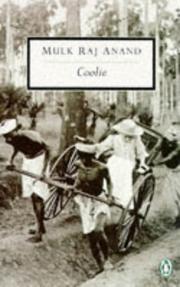
Coolie is a novel by Mulk Raj Anand first published in 1936. The second book written by Mulk Raj Anand, Coolie reinforced his position as one of India's leading English authors. The book is highly critical of British rule in India and India's caste system. The plot revolves around a 14-year-old boy, Munoo, and his plight due to poverty and exploitation aided by the social and political structures in place. Anand here tries to break the traditional way of life.
Source: Wikipedia (CC BY-SA).
Historical Background
Coolie (1936) is Mulk Raj Anand's second novel, following Untouchable (1935). Written while Anand was closely associated with the Bloomsbury circle in London and emerging as a founding figure of the Progressive Writers' Movement, the novel extends his commitment to social realism and to giving literary voice to India's oppressed and marginalized. Anand, deeply influenced by Gandhian humanism, Marxist thought, and his own exposure to working-class hardship, set out to expose the mechanisms of economic exploitation under colonial capitalism and indigenous social hierarchy alike. Coolie was composed during a period of intense nationalist ferment and growing labour and peasant movements in India, and it reflects the Progressive Writers' concern with using fiction as an instrument of social critique. The novel follows its orphaned protagonist across multiple regional and economic settings — hill village, small-town household, industrial Bombay, and colonial hill-station Simla — allowing Anand to survey a cross-section of Indian society and its structures of caste, class, and imperial power. It solidified Anand's reputation as one of the pioneering voices of Indian English fiction concerned with the poor and dispossessed.
The Story
Coolie traces the short, itinerant life of Munoo, a fourteen-year-old orphan boy raised by his aunt and uncle in a hill village in the Kangra hills. When his uncle can no longer support him, Munoo is sent to work as a servant in the household of a bank clerk, Babu Nathoo Ram, in the small town of Sham Nagar, where he endures humiliation and physical abuse despite his eagerness and intelligence. After accidentally injuring the household's daughter and being beaten for it, Munoo flees to Daulatpur, where he finds brief warmth working in a pickle factory owned by the kindly Prabha Dayal and his wife; however, Prabha's business partner, the unscrupulous Ganpat, cheats and bankrupts the business, uprooting Munoo once again. Munoo then falls in with a travelling circus, working alongside its elephant keeper on the journey to industrial Bombay, where he becomes a mill worker and coolie (manual labourer) in a cotton mill owned by a British expatriate, witnessing and experiencing the brutal conditions of factory life, slum poverty, and the beginnings of organized labour unrest. He finds camaraderie with the mill worker Ratan, whose agitation for the coolies' rights leads to his dismissal and to a strike and riots in the streets. After Munoo is struck by a car belonging to Mrs. Mainwaring, a wealthy, part-Indian woman who cultivates the image of a refined English lady, she takes him to the hill station of Simla to work as her rickshaw-puller. The punishing physical toil of pulling rickshaws in the mountain climate, compounded by years of exploitation and malnutrition, leads to his death from tuberculosis at around fifteen years old. The novel ends on this note of pathos, framing Munoo's death as the inevitable outcome of a social and economic order stacked against the poor.
Themes
- Exploitation of child labour
- Caste and class oppression
- Colonial capitalism and industrialization
- Poverty and dispossession
- Loss of innocence
- Human dignity amid degradation
- Social mobility and its limits
- Communal and religious division
Literary Devices
- Social realism — unflinching, documentary-style depiction of poverty and labour conditions
- Picaresque structure — episodic journey across settings exposes a cross-section of Indian society
- Third-person narration with close focalization on Munoo's consciousness
- Symbolic use of landscape and setting to mark stages of exploitation
- Vernacular-inflected English prose rendering Indian speech rhythms
- Irony — juxtaposition of Munoo's hope and resilience against systemic cruelty
Symbolism
- Munoo — the collective figure of India's exploited poor and child labourers
- The rickshaw — the crushing burden of colonial and economic servitude
- The mill/factory — dehumanizing machinery of industrial capitalism
- Journeys/trains — displacement and the powerlessness of the dispossessed
Critical Interpretation
Coolie has been read primarily through the lens of social-realist and Marxist criticism, given Anand's association with the Progressive Writers' Movement and his engagement with class exploitation under colonial capitalism. Critics have praised the novel's panoramic ambition in tracing Munoo across village, small town, factory city, and hill station, treating it as a document of India's uneven modernization and labour conditions in the 1930s. Postcolonial critics have examined the novel's critique of both British imperial structures and indigenous caste and class hierarchies, and its place within the broader project of Indian English fiction giving voice to subaltern experience. Some critics have found the novel's ending melodramatic or its social message overly didactic, weighing its literary artistry against its polemical, reformist intent; others have defended this directness as consistent with Anand's avowed humanist and socialist commitments. The novel is frequently discussed alongside Untouchable as foundational to socially engaged Indian English fiction.
Influence
Coolie, alongside Untouchable, established Mulk Raj Anand as a founding figure of socially conscious Indian English fiction and helped define the Progressive Writers' Movement's fictional project. Its portrayal of child labour, industrial exploitation, and the itinerant poor influenced subsequent generations of Indian writers in English who took up social realism and the depiction of marginalized lives, including later novelists concerned with caste, labour, and urban poverty. The novel is widely taught as an early and influential example of the Indian English novel's engagement with class and colonial critique, shaping how later writers and critics approached questions of representation, voice, and social protest in South Asian fiction.
Related Works
- Untouchable — Mulk Raj Anand
- Two Leaves and a Bud — Mulk Raj Anand
- The Village — Mulk Raj Anand
- Kanthapura — Raja Rao
- Swami and Friends — R. K. Narayan
Curator's Notes
- 1Coolie was Anand's second novel, published in 1936, a year after his debut Untouchable (1935).
- 2Anand was part of the London literary and Bloomsbury circle while writing his early novels, even as their subject matter was rooted in Indian poverty.
- 3Mulk Raj Anand was a founding figure of the Progressive Writers' Movement, which shaped a generation of socially engaged South Asian literature.
- 4The novel's protagonist Munoo passes through village, small-town, factory, and hill-station settings, giving the book a panoramic sweep across 1930s Indian society.
For the Exam
UGC NET frequently tests Coolie's authorship and publication date (1936, Mulk Raj Anand), its place within the Progressive Writers' Movement, and its status as social-realist/proletarian fiction critiquing colonial capitalism, caste, and child labour. Expect questions distinguishing it from Untouchable (1935), on Munoo as protagonist, the novel's episodic/picaresque structure across multiple settings (village, Bombay mills, Simla), and its ending with Munoo's death — often linked to questions on Indian English fiction's engagement with class, subaltern voice, and colonial critique.