Summary
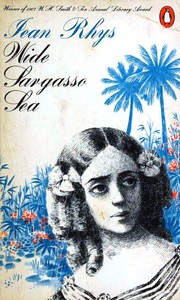
Wide Sargasso Sea is a 1966 postmodern novel by Dominican-British author Jean Rhys. Set in Jamaica in the 1830s–1840s, the novel is a postcolonial and feminist prequel to Charlotte Brontë's Jane Eyre (1847), detailing the background to Edward Rochester's marriage from the point of view of his wife Bertha Mason, Brontë's "madwoman in the attic", reimagined by Rhys as a Creole heiress named Antoinette Cosway.
Source: Wikipedia (CC BY-SA).
Historical Background
Jean Rhys (1890–1979), born in Dominica to a Welsh father and Creole mother, spent decades in England and Europe before returning, late in her career, to the Caribbean material of her youth. She had long been haunted by Charlotte Brontë's Jane Eyre (1847), particularly by Bertha Mason, the Creole "madwoman in the attic," whom Rhys felt Brontë had rendered as a voiceless stereotype. Wide Sargasso Sea, published in 1966 after nearly two decades of intermittent work, was Rhys's final novel and the book that revived a career eclipsed since the 1930s. Set in Jamaica and Dominica in the 1830s–1840s, in the unsettled years following the Emancipation Act of 1833, the novel draws on Rhys's own childhood memories of a decaying plantation culture, racial tension between former slaveholding families and the newly freed Black population, and the precarious social position of white Creoles, accepted by neither the English nor the Afro-Caribbean community. The novel is widely read as a founding text of postcolonial and feminist rewriting, using Brontë's canonical novel as a structural intertext while giving voice, history, and interiority to the woman Brontë's narrative silences.
The Story
The novel unfolds in three parts. Part One is narrated by Antoinette Cosway, a young Creole girl growing up at the neglected estate of Coulibri in Jamaica after the abolition of slavery has ruined her family's fortunes. Her widowed mother Annette remarries the wealthy Englishman Mr. Mason, but resentment among the formerly enslaved population erupts into violence: Coulibri is burned, Antoinette's disabled brother dies, and her mother descends into madness and is confined. Antoinette is sent to a convent school for safety and stability. Part Two shifts perspective to Antoinette's new husband, an unnamed young Englishman (understood to be Rochester), recounting their arranged marriage and honeymoon at Granbois, a remote estate in Dominica. Their intimacy curdles as he receives a letter from Daniel Cosway alleging madness in Antoinette's family line; his growing suspicion, cultural alienation, and sexual jealousy lead him to seduce a servant and to rename his wife "Bertha," symbolically erasing her identity. Antoinette, sensing his withdrawal, seeks help from obeah practices, which deepens the rift. He resolves to take her to England. Part Three, brief and narrated largely by Antoinette, presents her imprisoned in the attic of Thornfield Hall, disoriented and stripped of her sense of self, culminating in her dream-vision of setting the house ablaze — the act that, in Jane Eyre, precedes her death and clears the way for Jane and Rochester's union.
Themes
- Colonialism and its aftermath
- Race, whiteness, and Creole identity ('white cockroach')
- Madness as social construction and silencing
- Patriarchal power and naming/renaming
- Displacement, exile, and belonging
- Female voice and narrative authority
- Obeah, magic, and cultural collision
- Fire and destruction as agency
Literary Devices
- Multiple/dual narration — split between Antoinette and her husband, denying either full authority
- Intertextuality — rewrites and 'writes back' to Jane Eyre from the margins
- Unreliable narration — both narrators' perceptions are shaped by fear, prejudice, and self-interest
- Vivid tropical imagery — lush, oppressive landscape mirrors psychological states
- Symbolic renaming — 'Antoinette' becomes 'Bertha', enacting erasure of identity
- Fragmented, dreamlike structure — especially in Part Three, mimicking psychological disintegration
- Fire as recurring motif and structural bookend (Coulibri, Thornfield)
Symbolism
- Fire — destruction, but also rebellion and reclaimed agency
- The name 'Bertha' — colonial/patriarchal erasure of Antoinette's identity
- Coulibri estate — the decayed legacy of slavery and colonial wealth
- The Sargasso Sea — a directionless, tangled space between the Caribbean and England, symbolizing Antoinette's in-between identity
- The attic at Thornfield — female confinement and imposed madness
- Obeah/magic — a suppressed Afro-Caribbean worldview clashing with English rationalism
Critical Interpretation
Wide Sargasso Sea is a foundational text in postcolonial literary studies, frequently discussed alongside Gayatri Spivak's influential essay "Three Women's Texts and a Critique of Imperialism," which reads the novel as exposing the imperialist assumptions underwriting Brontë's feminist individualism in Jane Eyre. Feminist critics, building on Sandra Gilbert and Susan Gubar's The Madwoman in the Attic, have examined how Rhys restores interiority to Bertha Mason, reframing her "madness" as a product of patriarchal and colonial violence rather than innate pathology. Postcolonial critics debate whether the novel adequately represents Black Caribbean subjectivity or remains centered on white Creole marginality, since Antoinette occupies an ambiguous position as both colonizer's daughter and colonized outsider. The novel's fragmented, multi-voiced narration has also drawn sustained formalist and psychoanalytic attention, particularly regarding unreliable narration, trauma, and the construction of the "self" through others' language and naming.
Influence
Wide Sargasso Sea helped establish the "writing back" tradition in postcolonial literature, in which canonical Western texts are reimagined from the perspective of their silenced or marginalized characters. It is frequently paired in scholarship and classrooms with Jane Eyre as a paradigm case of intertextual counter-narrative, and it influenced subsequent postcolonial and feminist rewritings across the anglophone world, including later Caribbean and diasporic fiction concerned with Creole identity, colonial history, and female madness. The novel also strengthened Jean Rhys's critical reputation, prompting renewed attention to her earlier, previously underappreciated 1930s novels.
Related Works
- Jane Eyre — Charlotte Brontë
- The Madwoman in the Attic — Sandra Gilbert and Susan Gubar
- Good Morning, Midnight — Jean Rhys
- Annie John — Jamaica Kincaid
- A Small Place — Jamaica Kincaid
Curator's Notes
- 1Jean Rhys reportedly worked on the novel intermittently for around two decades before its 1966 publication.
- 2The novel was Rhys's last, published after a long period during which many assumed she had died, following her earlier acclaim in the 1930s.
- 3Rhys was born in Dominica, one of the Caribbean settings depicted in the novel's Part Two.
- 4The title refers to the real Sargasso Sea, a becalmed region of the North Atlantic, evoking Antoinette's sense of being stranded between two worlds.
For the Exam
UGC NET English commonly tests Wide Sargasso Sea as a key postcolonial and feminist text: its status as a prequel/counter-narrative to Jane Eyre, Spivak's critique of imperialism in canonical feminism, the "madwoman in the attic" trope, narrative structure (dual narrators, three-part division), themes of Creole/hybrid identity and colonial displacement, and the symbolism of naming (Antoinette/Bertha) and fire. Candidates should know Rhys's biographical/Caribbean background and the 1966 publication date precisely, and be able to compare Antoinette's characterization with Brontë's Bertha Mason.