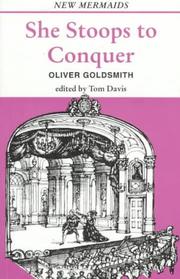
comedy · 1773
She Stoops to Conquer
comedy by Oliver Goldsmith
- 1773
- comedy
Summary
She Stoops to Conquer is a comedy play by Anglo-Irish writer Oliver Goldsmith. First performed in London in 1773, it is Goldsmith's best-known play and a cornerstone of both English literature and theatre classes in the English-speaking world. It is one of the few plays from the 18th century that has retained its popularity and is still regularly performed. Regarded as a classic of the period, the work has been adapted for films on numerous occasions, including in 1910, 1914, and 1923. The play is notable as the origin of the common phrase, "Ask me no questions and I'll tell you no lies."
Source: Wikipedia (CC BY-SA).
Historical Background
Oliver Goldsmith (1728-1774), Anglo-Irish poet, novelist, and playwright, wrote She Stoops to Conquer as a deliberate reaction against the fashionable "sentimental comedy" of his era, which favoured moralizing, tearful domestic drama over robust laughter. Goldsmith had already attacked this trend in his 1773 essay "An Essay on the Theatre; or, A Comparison Between Laughing and Sentimental Comedy," published in the Westminster Magazine, arguing that comedy should provoke laughter by exhibiting the "faults and follies" of ordinary life rather than induce virtuous tears. The play was first performed at Covent Garden Theatre in London on 15 March 1773, produced with the backing of Goldsmith's friend Samuel Johnson, who supported the play against the doubts of the theatre's manager, George Colman, who feared a non-sentimental comedy would fail. It was an immediate popular success, reviving the tradition of Restoration-style "laughing comedy" associated with dramatists such as Farquhar and Vanbrugh, though tempered by Goldsmith's warmer, more good-natured tone. The plot device of mistaking a private home for an inn is traditionally said to derive from an incident in Goldsmith's own youth, when he was reportedly directed, as a joke, to a gentleman's house believing it to be an inn. The play remains one of the very few eighteenth-century English comedies still regularly performed today.
The Story
Young Marlow, painfully shy and tongue-tied before women of his own class yet bold with social inferiors, travels with his friend Hastings into the country to court Kate Hardcastle, whom he has never met, at the urging of their fathers. Kate's mischievous step-brother Tony Lumpkin, resenting the visitors, misdirects the tired travellers, telling them that the Hardcastle home is actually a rustic inn. Marlow and Hastings arrive and treat the bewildered Mr. Hardcastle as an innkeeper, to his mounting outrage, while Hastings recognizes Kate's cousin Constance Neville, whom he loves and hopes to elope with, taking her jewels from the watchful Mrs. Hardcastle. Kate, discovering Marlow's error and his crippling shyness in her presence as a "lady," resolves to test and win him by playing along: she poses as a barmaid before him, since he can converse freely and flirt with women he believes are of low rank. Through this disguise she draws out his genuine, warmer character, while he remains oblivious to her true identity even as he falls for her. Tony Lumpkin, meanwhile, drives his mother Mrs. Hardcastle and Constance on a comic nighttime journey in circles, convincing them they are lost far from home when they are merely riding around the family garden, so that Hastings and Constance can make their escape. Misunderstandings compound through mistaken identities, intercepted letters, and Mr. Hardcastle's fury at his "guests," until Marlow finally learns Kate's true identity and confronts his own prejudice against confident young ladies, Tony is freed from a supposed marriage contract to Constance, and the play resolves in the union of both young couples.
Themes
- Appearance versus reality and mistaken identity
- Social class and pretension
- Shyness, courtship, and true character revealed through disguise
- The generational conflict between old and new manners
- Town versus country values
- Deception as a means to truth and happiness
- Gender roles and female agency in courtship
Literary Devices
- Mistaken identity — the central comic engine, from the house-as-inn confusion to Kate's disguise as a barmaid
- Dramatic irony — the audience knows the truth long before Marlow or Mrs. Hardcastle do, generating sustained comic tension
- Farce and physical comedy — the chaotic night-journey and household confusions drive knockabout humour
- Comedy of manners — witty dialogue exposing social pretension and class anxiety
- Malapropism and rustic dialect — used in Tony Lumpkin's speech for comic characterization
- Contrast/foil characters — Marlow's public shyness versus his private boldness, and Kate's demure versus barmaid personas
- Symmetry of plot — parallel courtships (Marlow/Kate and Hastings/Constance) structure the action
Symbolism
- The Hardcastle house mistaken for an inn — symbolizes the instability of appearances and social codes
- Kate's disguise as a barmaid — represents the freedom found outside rigid class and gender expectations
- The night journey around the garden — symbolizes confusion and misdirection masquerading as movement/progress
- Constance's jewels — symbolize the material constraints (inheritance, family control) placed on women's choices
Critical Interpretation
Critics have long read She Stoops to Conquer as Goldsmith's practical manifesto against sentimental comedy, enacting the "laughing comedy" he championed in his essay on the theatre. Scholars situate it within the eighteenth-century debate between sentimentalism and the older, more satirical comic tradition descended from Restoration drama, noting Goldsmith's more benevolent, less cynical tone compared to writers like Wycherley or Congreve. The play has been discussed for its treatment of class anxiety in a period of rising bourgeois wealth, with the inn/house confusion read as staging real contemporary uncertainties about social status and hospitality. Feminist and character-focused criticism has examined Kate Hardcastle's active stratagem as an unusually resourceful heroine for the period, one who manipulates class disguise to achieve romantic and social ends on her own terms rather than remaining passive. Tony Lumpkin has attracted attention as a stock "mischievous rustic" figure who nonetheless drives the plot's resolution. The play is generally regarded as a highpoint of eighteenth-century stage comedy and a bridge between Restoration wit and later, gentler nineteenth-century comic drama.
Quotations
Ask me no questions, and I'll tell you no fibs.
Spoken by Tony Lumpkin (Act III), explaining how he got hold of the jewels; the line is the origin of the now-proverbial phrase, popularly remembered today in the slightly altered form "...I'll tell you no lies."
This is Liberty-hall, gentlemen. You may do just as you please here.
Mr. Hardcastle welcoming his guests in Act II, unaware they believe his house to be an inn.
I love everything that's old: old friends, old times, old manners, old books, old wine.
Mr. Hardcastle expressing his conservative, old-fashioned temperament in Act I.
Influence
She Stoops to Conquer is credited with helping to revive "laughing comedy" on the English stage against the dominant fashion for sentimental drama, keeping alive a tradition of witty, situation-driven comedy that fed into later nineteenth-century comic playwrights. Its use of mistaken identity, disguise, and class confusion as engines of both humour and social critique anticipated devices later refined by writers such as Richard Brinsley Sheridan, and more distantly by Oscar Wilde's comedies of manners. The play's endurance as one of the few eighteenth-century English comedies still in the regular modern repertoire has made it a benchmark text for teaching the mechanics of stage comedy, farce, and dramatic irony.
Adaptations
- Silent film adaptation (1910)
- Silent film adaptation (1914)
- Silent film adaptation (1923)
Related Works
- The Rivals by Richard Brinsley Sheridan
- The School for Scandal by Richard Brinsley Sheridan
- The Way of the World by William Congreve
- The Importance of Being Earnest by Oscar Wilde
- The Vicar of Wakefield by Oliver Goldsmith
Curator's Notes
- 1The play's famous line "Ask me no questions and I'll tell you no fibs" (spoken by Tony Lumpkin) is the origin of the now-proverbial English phrase, usually quoted today as "...I'll tell you no lies."
- 2The mistaken-house-for-inn plot is traditionally traced to a prank played on the young Oliver Goldsmith, who was directed to a private house believing it an inn.
- 3Samuel Johnson supported the play and encouraged its reluctant producer, Covent Garden manager George Colman, to stage it in 1773.
- 4It premiered on 15 March 1773 and remains, unusually for an eighteenth-century comedy, in regular modern stage performance.
- 5The play was written explicitly as a counter-argument, in dramatic form, to Goldsmith's own published essay attacking sentimental comedy.
For the Exam
UGC NET frequently tests She Stoops to Conquer as a key example of eighteenth-century "laughing comedy" versus sentimental comedy, often pairing it with Goldsmith's essay on the theatre. Expect questions on the play's subtitle ("Mistakes of a Night"), the mistaken-identity plot mechanics, character identification (Marlow, Kate, Tony Lumpkin, the Hardcastles, Constance Neville), the origin of the phrase "Ask me no questions and I'll tell you no fibs/lies," the 1773 premiere date and Covent Garden setting, and Goldsmith's place in Anglo-Irish literature alongside his contemporary Sheridan.