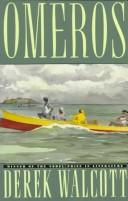
epic literature · 1990
Omeros
epic poem by Caribbean writer Derek Walcott
- 1990
- epic literature
- ◆ Nobel-winning author
Summary
Omeros is an epic poem by Saint Lucian writer Derek Walcott, first published in 1990. The work is divided into seven "books" containing a total of sixty-four chapters. Many critics view Omeros as Walcott's finest work.
Source: Wikipedia (CC BY-SA).
Historical Background
Derek Walcott began Omeros in the late 1980s, publishing it in 1990, by which time he was already the leading poet of the anglophone Caribbean. Born in Castries, St Lucia, in 1930, Walcott had spent decades exploring how Caribbean landscape, history, and vernacular speech could inherit and transform the resources of European literary tradition. Omeros extends that project on an epic scale, taking its title from the Greek name for Homer and openly invoking the Iliad and the Odyssey while relocating their concerns to the fishing village of Gros Islet, St Lucia. The poem is written in a variable, loosely terza-rima-derived verse Walcott adapted from Dante, and it draws on his lifelong preoccupation with mapping the Caribbean's colonial history—slavery, indentureship, tourism, displacement—onto classical and biblical templates. Walcott had already engaged with Homeric material in earlier work; Omeros is the culmination of that engagement, composed while he moved between St Lucia, Boston, and other locations while teaching. The poem's publication two years before he won the 1992 Nobel Prize in Literature, awarded partly in recognition of this achievement, cemented its status as his central masterwork, synthesizing personal memory, Caribbean folk life, and a sustained argument about who gets to be epic heroes.
The Story
Omeros has no single linear plot but interlaces several narrative strands across its seven books, set mainly in and around the St Lucian fishing village of Gros Islet. Two fishermen, Achille and Hector, are rivals for the love of Helen, a housemaid whose name and beauty echo Helen of Troy, and their quarrel forms the poem's central "Trojan War" thread. Achille undertakes a visionary journey back across the Atlantic to Africa, imagining his ancestors and the Middle Passage, linking the island's present to the trauma of slavery. Major Plunkett, a retired English officer, and his wife Maud, settlers on the island, research the island's history, including the historical Battle of the Saintes, seeking to understand and record St Lucia's colonial past. A blind old fisherman, Seven Seas, functions as a Homer-figure and communal memory-keeper, sometimes identified with the poem's shifting narrator-poet, who also appears as a Walcott-like figure traveling to Europe and North America and reflecting on exile, art, and homecoming. The narrative moves between the Caribbean, Africa, and sites in the wider Atlantic world (including a visit to the American West and Europe), weaving together love, jealousy, illness, and death (Hector dies in a car crash; Maud Plunkett dies and is mourned) with meditations on history, colonialism, and the possibility of a New World epic. The poem closes with a return to the daily rhythms of the sea and village life, affirming continuity over the destructive cycles of history.
Themes
- Rewriting the classical epic from a Caribbean perspective
- History, colonialism, and the legacy of slavery
- Exile, displacement, and homecoming
- The sea as memory and myth
- Love and rivalry as engines of conflict
- Identity, race, and hybridity in the postcolonial Caribbean
- The relationship between art, language, and place
- Healing and the possibility of reconciliation with the past
Literary Devices
- Epic allusion — sustained parallel to Homer's Iliad and Odyssey transposed onto Caribbean characters and settings
- Terza-rima-influenced verse — a flexible three-line stanza form adapted from Dante's hendecasyllabic tercets
- Multivocal narration — shifting narrators, including a Walcott-like poet-narrator and the blind fisherman Seven Seas
- Vernacular and Creole-inflected diction — blending St Lucian speech patterns with elevated literary English
- Vivid nature imagery — the sea, light, and landscape used as recurring symbolic texture
- Intertextuality — weaving in Dante, the Bible, and Caribbean and African history alongside Homer
- Circular/non-linear structure — recurring motifs and returns rather than strict chronological plot
Symbolism
- The sea — memory, history, continuity, and the Middle Passage
- Helen — contested beauty and the island of St Lucia itself, fought over by colonial powers
- The wound of Philoctete — the unhealed trauma of slavery and colonial history
- Seven Seas (the blind fisherman) — Homer/collective memory and oral tradition
- The swift (bird) — migration, connection between Africa and the Caribbean
Critical Interpretation
Critics have widely praised Omeros as Walcott's masterwork and a landmark of postcolonial epic, though debate persists over its use of Homeric parallels. Some scholars argue the classical allusions productively "decolonize" epic form by relocating heroism to ordinary Caribbean fishermen and laborers, while others have questioned whether invoking a European canonical model risks subordinating Caribbean experience to Western literary authority rather than fully liberating it. The poem has been read through postcolonial theory as an act of "writing back" to empire, and through discussions of Caribbean and Black Atlantic literature (echoing concerns raised by critics such as Paul Breslin and others who have written on Walcott) for its treatment of history, hybridity, and the search for a usable past amid the trauma of slavery. Its hybrid form—part epic, part lyric, part travel narrative—has also drawn attention for resisting straightforward generic classification, and its multilingual, Creole-inflected texture has been examined as central to Walcott's broader poetics of Caribbean identity and language.
Influence
Omeros is widely regarded as one of the most significant epic poems of the twentieth century and a foundational text of postcolonial and Caribbean literature, reinforcing Walcott's stature ahead of his 1992 Nobel Prize in Literature. It has influenced later poets and writers engaging with epic form, myth, and postcolonial history, and is frequently taught and cited as a model for how non-Western writers can reclaim and transform inherited European literary traditions. Its example has encouraged subsequent Caribbean and diasporic poets to blend vernacular speech, local landscape, and classical allusion in ambitious long-form poetry.
Related Works
- The Iliad — Homer
- The Odyssey — Homer
- Another Life — Derek Walcott
- The Divine Comedy — Dante Alighieri
- Collected Poems 1948–1984 — Derek Walcott
Curator's Notes
- 1Omeros is the Greek name for Homer, signaling the poem's central classical allusion from its title.
- 2The poem is composed of seven books containing sixty-four chapters in total.
- 3Derek Walcott was awarded the Nobel Prize in Literature in 1992, two years after Omeros was published.
- 4Walcott was also a painter, and visual, landscape-based imagery pervades the poem's descriptions of St Lucia.
For the Exam
UGC NET English commonly tests Omeros as a key postcolonial epic: its Homeric parallels (Achille/Achilles, Hector, Helen), its verse form influenced by Dante's terza rima, its treatment of Caribbean history and slavery, and Walcott's biographical context including the 1992 Nobel Prize. Candidates should be able to identify Walcott as St Lucian, place Omeros within postcolonial rewriting of classical epic, and recognize its major characters and themes of history, exile, and identity.